Anewrule
Get a Quote
Anewrule
Agricultural plant protection drones help farmers spray pesticides, fertilizers, and nutrients more efficiently while reducing labor costs and improving crop management.
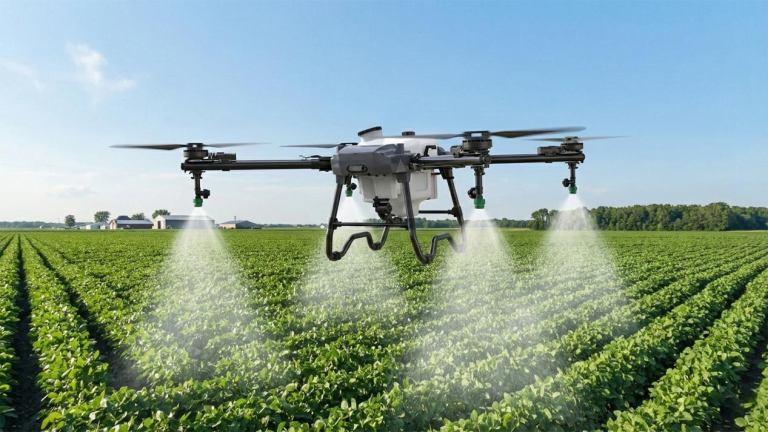
Agriculture is becoming more intelligent, efficient, and technology-driven. As farms grow larger and labor costs continue to rise, traditional manual spraying methods can no longer meet the demands of modern crop management.
Agricultural plant protection drones provide an advanced solution for pesticide spraying, fertilizer application, crop monitoring, and precision agriculture. They help farmers save time, reduce labor intensity, and improve spraying accuracy.
An agricultural plant protection drone is a UAV designed for crop spraying and field management. It usually includes a flight platform, spraying system, tank, pump, nozzles, battery, radar, GPS positioning, and intelligent control system.
These drones can fly at low altitude over farmland and spray pesticides, herbicides, fungicides, fertilizers, or nutrients evenly across crops.
They are widely used in:
Compared with manual spraying, agricultural drones can cover large areas in a shorter time. A drone can complete spraying work that would normally require several workers.
This is especially useful during busy farming seasons when timely pest control is critical.
Manual spraying requires significant labor and exposes workers to chemicals. In many regions, labor shortages have become a serious challenge for farmers.
Plant protection drones reduce dependence on manual labor and allow one operator to manage large spraying tasks efficiently.
Agricultural drones can spray chemicals more evenly and precisely. With GPS positioning and automatic route planning, drones can follow planned flight paths and avoid repeated spraying or missed areas.
This helps reduce chemical waste and improve crop protection results.
Traditional pesticide spraying can expose workers to harmful chemicals. Drones allow operators to stay at a safer distance while controlling the spraying process.
This improves operator safety and reduces direct contact with pesticides.
Some farmland is difficult for tractors or manual workers to access, such as mountain orchards, muddy fields, terraced fields, and wet rice paddies.
Agricultural drones can fly over these areas easily and complete spraying tasks without damaging crops or soil.
A typical agricultural spraying drone works through the following process:
Many advanced drones support breakpoint continuation. This means that after changing the battery or refilling the tank, the drone can continue spraying from the previous stopping point.
Drones can quickly spray pesticides to control insects and plant diseases.
Liquid fertilizer and foliar nutrients can be applied efficiently by drones.
Drones help control weeds in large farmland areas.
For fruit trees and tea plantations, drones can spray from above and improve coverage.
When equipped with cameras or multispectral sensors, drones can also monitor crop growth, identify problem areas, and support precision farming.
When selecting an agricultural plant protection drone, buyers should consider:
The right drone should match the crop type, farm size, terrain condition, and spraying requirements.
Agricultural drones are an important tool in precision farming. They help farmers apply chemicals and nutrients only where needed, reducing waste and improving resource efficiency.
With data collection and intelligent control systems, drones can support better field management and help increase crop yield.
In the future, agricultural drones will work more closely with AI, mapping software, satellite positioning, and farm management platforms.
Agricultural plant protection drones are transforming modern farming. They provide faster spraying, lower labor costs, safer operation, and more accurate crop protection.
For farmers, agricultural service providers, and large-scale plantations, plant protection drones are an effective investment for improving productivity and farm management efficiency.
As agriculture continues to move toward automation and precision, plant protection drones will play an increasingly important role in global farming.

English
Tell us about your project — energy storage, UAVs, radar or composites. Our team replies within one business day.
-1.png)